
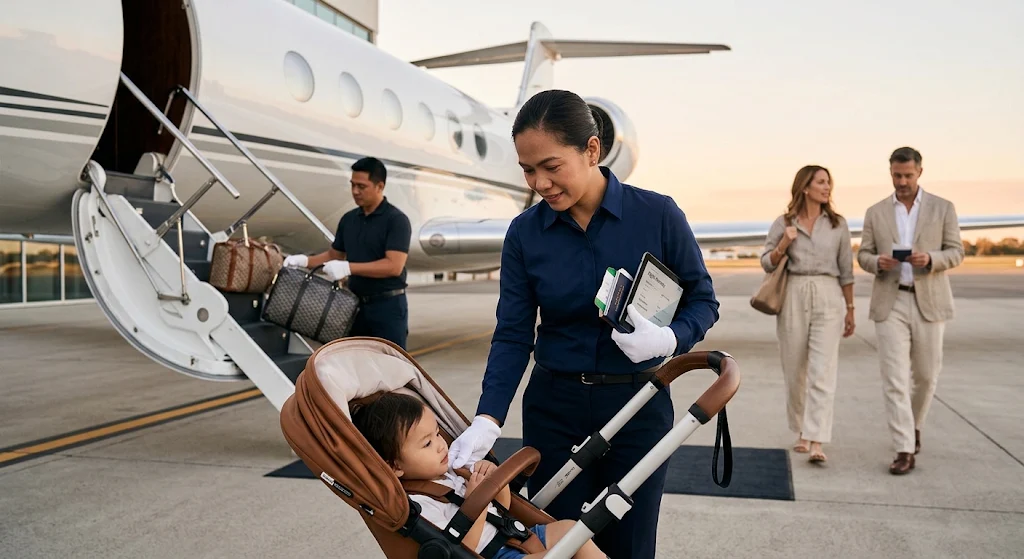
For ultra-high-net-worth families, seasonal travel, multi-destination holidays, and international retreats are integral components of a luxury lifestyle. Whether spending summers in the Hamptons, wintering in Aspen, or chartering yachts across the Mediterranean, maintaining domestic continuity while away from the primary residence is essential. Bringing key household personnel—such as private nannies, executive housekeepers, personal chefs, or estate managers—ensures that family routines remain seamless, comfortable, and well-managed regardless of location.
However, transitioning staff from a fixed estate to a mobile travel environment introduces unique logistical, professional, and cultural considerations. Successfully navigating travel with domestic staff requires clear planning, clear boundaries, and an understanding of travel etiquette.
-
Strategic Pre-Travel Logistics and Legal Frameworks
Flawless travel execution begins months before departure. Managing international travel logistics for household personnel involves rigorous administrative foresight to prevent compliance issues and operational friction abroad.
Documentation, Visas, and Health Protocols
Before finalizing itineraries, estate managers or principals must audit the legal and medical travel readiness of all accompanying staff. Depending on the staff member’s citizenship, securing international entry visas, transit permits, or work authorizations can require extended lead times.
Principals should ensure that staff passports have at least six months of validity beyond the intended return date and contain sufficient blank pages. Furthermore, comprehensive health preparations—including required vaccinations, international medical insurance coverage, and travel health clearances—must be arranged well in advance. Having a centralized, secure digital repository of staff travel documents allows for smooth check-ins and emergency access during transit.
Compensation, Expenses, and Per Diem Structures
Travel introduces operational expenses that fall outside regular domestic duties. Establishing a transparent financial framework before departure is critical for maintaining professional trust and avoiding awkward misunderstandings while abroad.
All travel-related costs—including first-class or premium economy transit, hotel accommodations, meals, specialized gear, and local transportation—should be fully covered by the employer. Additionally, staff should receive a clear per diem allowance for personal meals or incidentals during off-duty hours. Employers should also outline overtime compensation or travel bonuses prior to departure, ensuring that extended duty hours during travel are fairly compensated in accordance with prior agreements.
-
Navigating Travel Etiquette, Boundaries, and Daily Operations
The spatial dynamics of boutique hotels, private villas, and luxury yachts differ significantly from a sprawling primary estate. Maintaining professional boundaries while living in close quarters requires deliberate structure and mutual respect.
Establishing Clear Schedule Rotations and Off-Duty Boundaries
During luxury vacations, the boundary between working hours and leisure time can easily blur. Because staff are staying on-site or nearby, there is a natural temptation to call upon them outside agreed-upon working hours.
To prevent burnout and maintain service quality, employers must establish structured shift rotations and guaranteed off-duty time. If a private nanny manages childcare during evening dinners, she should be granted dedicated resting hours during the day. Clear communication regarding daily schedules allows staff to plan their personal downtime, explore local surroundings, and rest effectively, ensuring they remain energized and attentive during duty hours.
Accommodation Standards and Spatial Protocol
Providing appropriate, comfortable accommodations for travel staff is a direct reflection of an employer’s commitment to standards. Staff accommodations should offer complete privacy, quiet, and comfort equivalent to the overall standard of the trip.
In a luxury hotel or resort setting, staff should be provided with private adjoining or nearby rooms rather than shared spaces. When renting private villas or estates, staff quarters should feature private en-suite bathrooms and separate entrances where possible. Ensuring that personnel have a private retreat at the end of the day preserves professional dignity and reinforces spatial boundaries within the family’s holiday environment.
Discretion in Public and High-Profile Travel Settings
Traveling exposes families to public environments, high-end commercial venues, and international transit hubs where privacy risks increase. Staff members must be thoroughly briefed on travel discretion and privacy protocols.
Personnel should understand how to navigate public interactions, manage luggage discretely, and protect the family’s location and itinerary from public exposure or social media posting. Whether managing reservations at exclusive beach clubs or handling private aviation logistics, professional staff maintain a polished, unobtrusive presence that shields the family from unwanted attention.
-
Conclusion
Traveling with domestic staff allows luxury vacations to remain truly relaxing, seamlessly bridging the comforts of a primary residence with the excitement of international travel. By combining meticulous pre-trip logistics with clear professional boundaries and elevated travel standards, principals can create a harmonious environment for both their families and their team. At Luxury Philippines Domestic Services USA, we place exceptionally trained Filipino domestic professionals—from governesses to estate managers—who excel in both estate governance and international travel logistics, ensuring your family enjoys total peace of mind wherever your journey leads.

